
What Is Google Discover & How It Works After the February 2026 Core Update
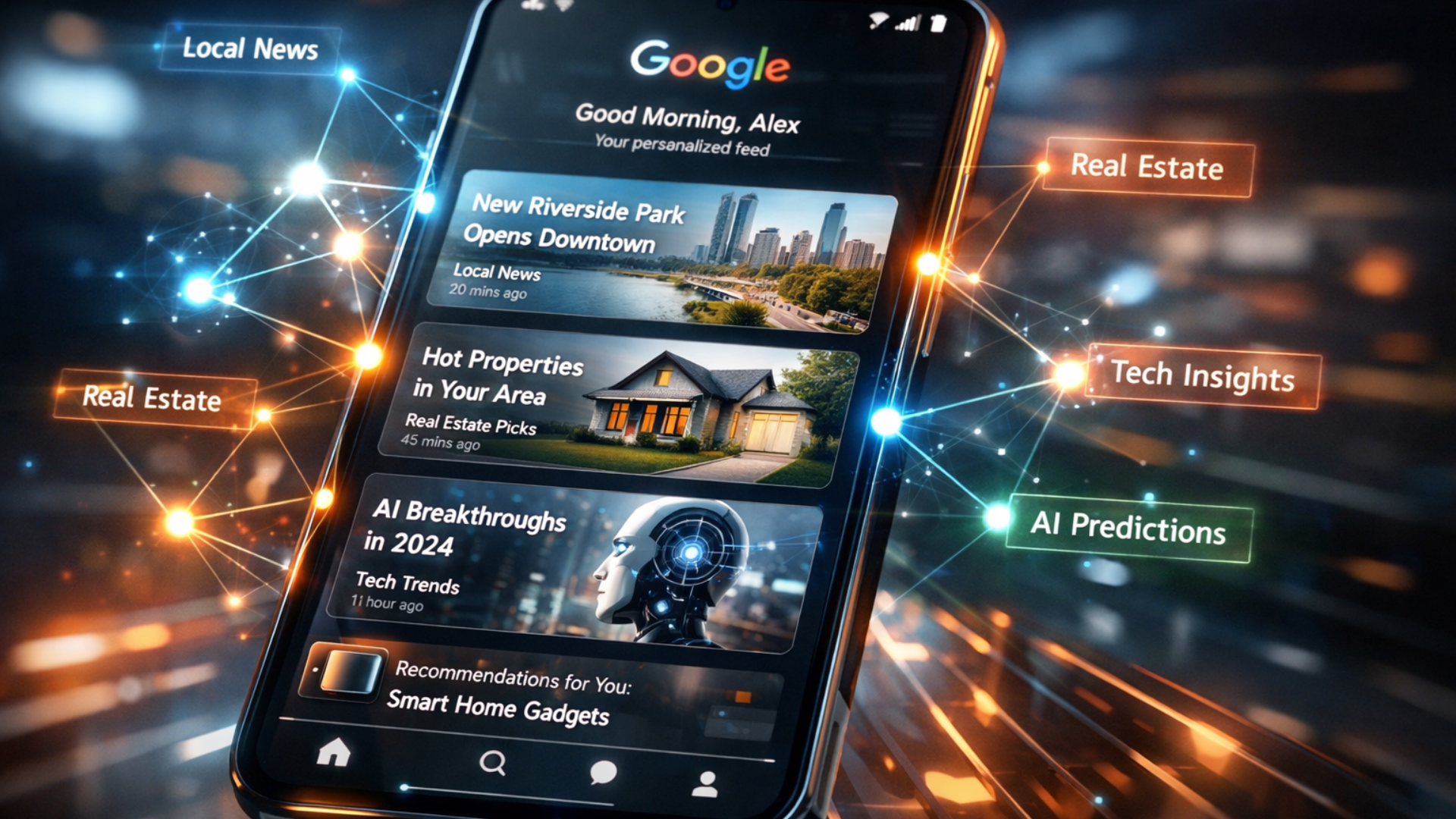
Google Discover is a personalized content feed in the Google app and on Android home screens that surfaces articles, videos and social content based on a user’s interests, activity and location, rather than traditional keyword searches. [1][2]
In summary: Google Discover uses machine learning to predict what someone is likely to care about next, and the February 2026 Discover core update shifted this system to favor locally relevant, in-depth, original and non-clickbait content from sites that demonstrate clear expertise. [2][3][4]
Table of Contents
- What is Google Discover?
- How Google Discover works in 2026
- What changed in the February 2026 Discover core update?
- How local and country-level relevance now shape Discover
- Clickbait, page experience and quality signals
- Personalization and user-level signals
- What site owners should do after the 2026 update
- FAQs about Google Discover after the 2026 update
What is Google Discover?
Google Discover is a recommendation feed that appears in the Google app, on the mobile homepage in Chrome and on Android devices. It shows a stream of content cards tailored to each user’s preferences. [1][6]
Instead of responding to a specific query, Discover predicts what a person might want to read or watch based on their search history, location, language, app activity and engagement with specific topics or entities. [1][6]
For publishers, this means Discover can send large, sometimes unpredictable bursts of traffic when content strongly aligns with user interests—even without branded search intent. [1][9]
How Google Discover works in 2026
Discover uses similar systems to Google Search, but ranks content based on predicted user interest rather than typed keywords. [6][8]
Eligible content must be indexed and comply with Discover content policies. Algorithms then evaluate freshness, visual quality, mobile UX, and perceived usefulness. [6][3]
Because the feed is personalized, two users may see entirely different Discover content even if they follow similar interests. [8][6]
What changed in the February 2026 Discover core update?
The February 2026 Discover core update improved how Google selects and ranks articles in Discover—independent of Search updates. [2][3][5]
The update emphasized:
1) Locally relevant content,
2) reduced clickbait, and
3) surfacing original, timely, expert articles.
Initial rollout began in the U.S., with expansion planned globally. Non-U.S. publishers may experience delayed impact. [2][4][5]
How local and country-level relevance now shape Discover
The update boosts visibility for publishers located in the same country as the user—especially for region-specific content. [2][5]
Non-local publishers may see a drop in Discover reach for those markets, while local experts gain more exposure. [2][4][9]
Globally, Discover aims to deliver more trustworthy, useful results based on a user’s region. [5][8]
Clickbait, page experience and quality signals
Google revised Discover documentation to clearly separate \”clear titles\” from “clickbait” avoidance. [3][6]
Titles should reflect the article accurately—no exaggeration or withholding info. [3]
Page experience also plays a role: fast loading, mobile stability, and minimal intrusive content improve Discover eligibility. [3][6]
Personalization and user-level signals
Discover remains deeply personalized, with user behavior and topic engagement affecting what appears in the feed. [8][6]
Even top-quality content won’t be shown to everyone—Google filters based on likelihood of interest. [1][8]
New features like Follow and feed customization tools allow users more control over Discover content. [7][6]
What site owners should do after the 2026 update
Publish in-depth, original articles with expertise in your niche. Use descriptive, non-clickbait headlines and ensure fast mobile UX. [3][5][9][10]
Focus on geo-targeted content when relevant—Google now highlights regional authority. [2][4][5]
Long-term success in Discover depends on sustained quality, originality, UX, and user alignment not hacks or gimmicks. [2][3][8]
FAQs About Google Discover After the February 2026 Update
- Did the February 2026 core update change how my site ranks in Google Search?
No. It targets Discover only, though similar quality principles apply. - Why did my Discover traffic drop after February 2026?
Your site may lack local signals, originality, or may use headlines that seem clickbait-like. - Can non-US sites still appear in US Discover feeds?
Yes, but U.S.-based publishers may be prioritized when content is regionally relevant. - What content performs best post-update?
Original, locally relevant, well-structured articles from expert sources. - How can I track Discover traffic?
Use Google Search Console’s Discover report and analytics referral filters.
Sources:
- Moz – How to Drive Traffic in Google Discover
- Search Engine Land – Google Discover Core Update
- Search Engine Journal – Updated Discover Guidelines
- Proceed Innovative – Discover Update Breakdown
- Search Engine Roundtable – Core Update Insights
- Google – Discover Documentation
- 9to5Google – Follow & Feed Customization
- ThatWare – February 2026 Update Analysis
- Practical Ecommerce – Google Discover Tips
- SearchPika – 2026 Discover Update Overview