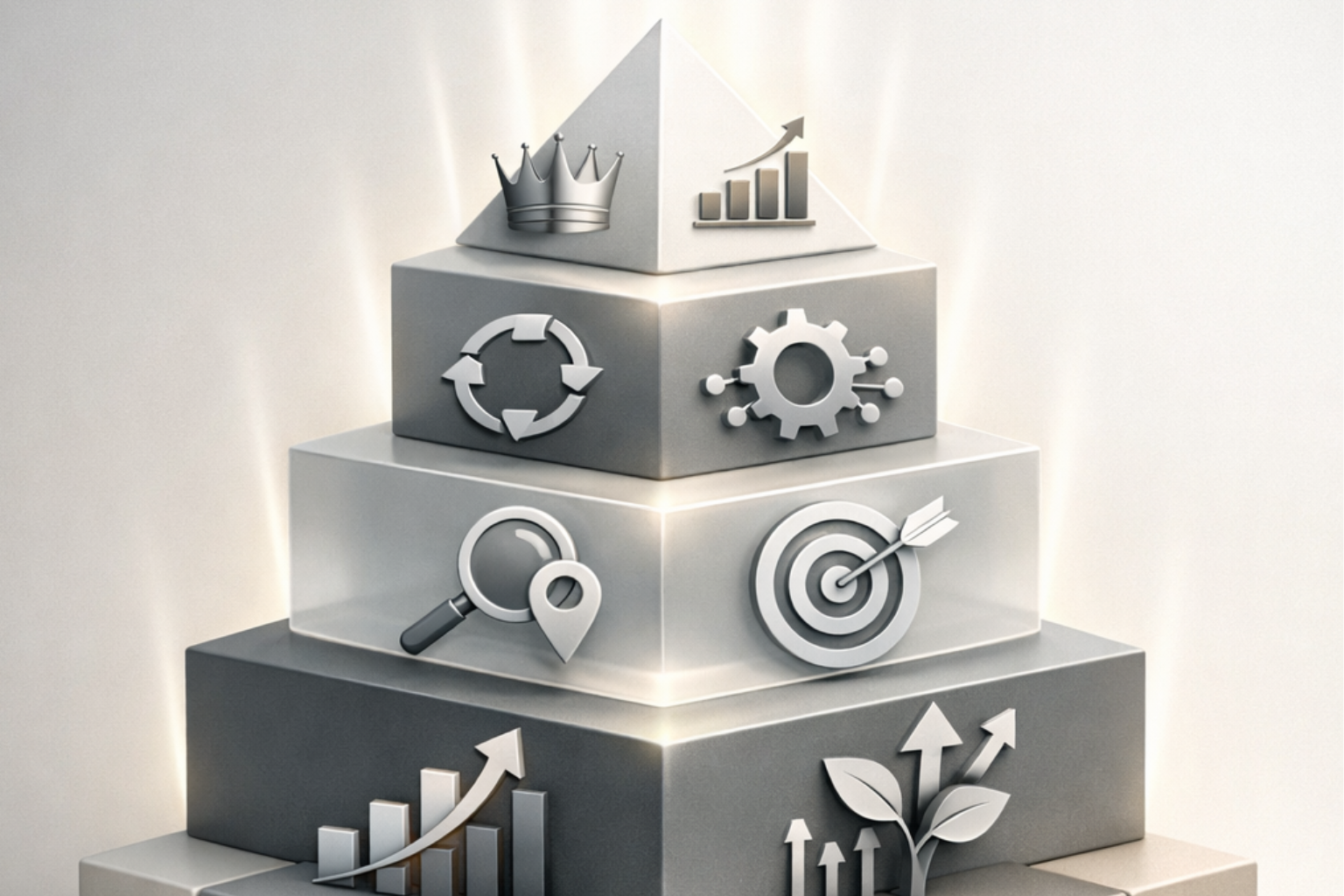
Which Marketing Tier Delivers the Highest ROI? A Practical Breakdown
The marketing tier with the highest ROI depends on business stage, but for most companies, demand capture delivers the fastest and most reliable return. That said, ROI compounds only when foundational and nurture layers are in place.
In summary: High-ROI marketing is not about chasing the “best channel.” It’s about activating the right tier of the marketing pyramid at the right time and stacking it correctly with the layers beneath it.
Table of Contents
- Short answer: highest ROI marketing tier
- Why ROI varies by business stage
- ROI breakdown by marketing pyramid tier
- When ROI becomes misleading
- How to sequence marketing for maximum ROI
- Where ROI fits in the marketing pyramid
Short Answer: Which Marketing Tier Has the Highest ROI?
For most businesses, demand capture delivers the highest immediate ROI because it targets people who already have intent. This includes search, local SEO, directories, and retargeting.
However, demand capture only performs consistently when it rests on strong foundations and feeds into effective nurture systems.
Why Marketing ROI Varies by Business Stage
ROI is contextual. The same tactic can be wildly profitable for one business and unprofitable for another depending on maturity, clarity, and systems.
- Early-stage businesses see ROI first from foundations and demand capture.
- Growing businesses unlock ROI through nurture and conversion optimization.
- Scaling businesses see the highest ROI from authority and compounding channels.
This is why chasing “best channels” without context leads to disappointment.
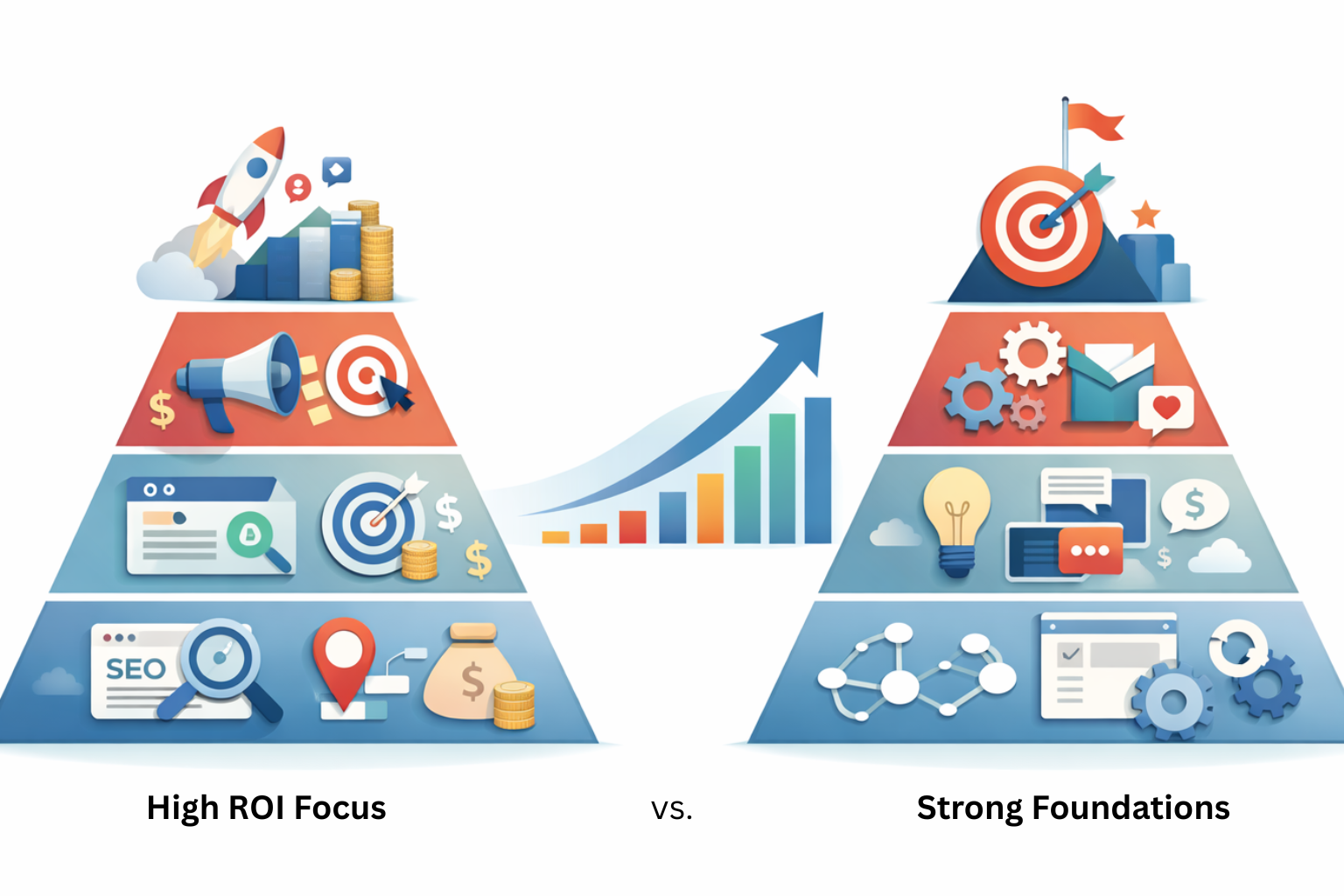
ROI Breakdown by Marketing Pyramid Tier
Tier 1: Foundations (Indirect but Essential ROI)
Foundations rarely show ROI in isolation, but they improve the ROI of every tier above them.
- Clear positioning increases relevance
- Stronger offers improve conversion rates
- Better UX lowers cost per lead
Foundations don’t generate revenue directly—but they determine how profitable all other marketing becomes.
Tier 2: Demand Capture (Highest Immediate ROI)
Demand capture converts existing intent, which is why it often delivers the fastest and most measurable ROI.
- SEO and local SEO
- High-intent Google Ads
- Directories and marketplaces
- Retargeting warm audiences
When foundations are solid, demand capture is typically the most capital-efficient tier.
Tier 3: Demand Creation (Delayed but Scalable ROI)
Demand creation builds future ROI by introducing your brand to new audiences.
- Content marketing
- Social and video
- Cold paid media
ROI here compounds over time, especially when content and creative assets are reused across channels.
Tier 4: Nurture & Monetization (LTV Multiplier)
Nurture systems dramatically increase ROI by extracting more value from existing traffic and leads.
- Email and SMS follow-up
- Automation and segmentation
- Sales process optimization
This tier often produces the highest lifetime value ROI, even if it doesn’t generate first-touch conversions.
Tier 5: Authority & Scale (Compounding ROI)
Authority-driven marketing delivers the most durable ROI over time.
- Thought leadership
- Referrals and partnerships
- Owned audiences
This tier lowers CAC and increases trust—but only after the lower tiers are stacked.
When ROI Becomes Misleading
Short-term ROI can hide long-term problems. Channels with high immediate returns may plateau if foundations or nurture are weak.
True ROI should be measured across:
- Cost per acquisition (CPA)
- Lifetime value (LTV)
- Payback period
- Scalability
How to Sequence Marketing for Maximum ROI
- Fix foundations first
- Activate demand capture
- Add nurture systems
- Expand demand creation
- Build authority for scale
This sequence prevents wasted spend and unlocks compounding returns.
Where ROI Fits in the Marketing Pyramid
ROI is not owned by one tier it emerges from how tiers are stacked together.
For the full framework and all five tiers, read the cornerstone guide:
The Marketing Pyramid Explained: 5 Smart Tiers That Drive Scalable Growth
FAQs About Marketing ROI
- Which marketing tier delivers the highest ROI?
Demand capture usually delivers the highest immediate ROI because it targets existing buyer intent. - Why don’t foundations show direct ROI?
Foundations improve conversion and efficiency, increasing ROI across all other tiers. - Is paid ads always the highest ROI channel?
No. Ads perform best when foundations and nurture systems are already in place. - How do you measure true marketing ROI?
By tracking CPA, LTV, payback period, and scalability—not just short-term returns. - When should businesses focus on authority marketing?
After foundations, demand capture, and nurture systems are stable.