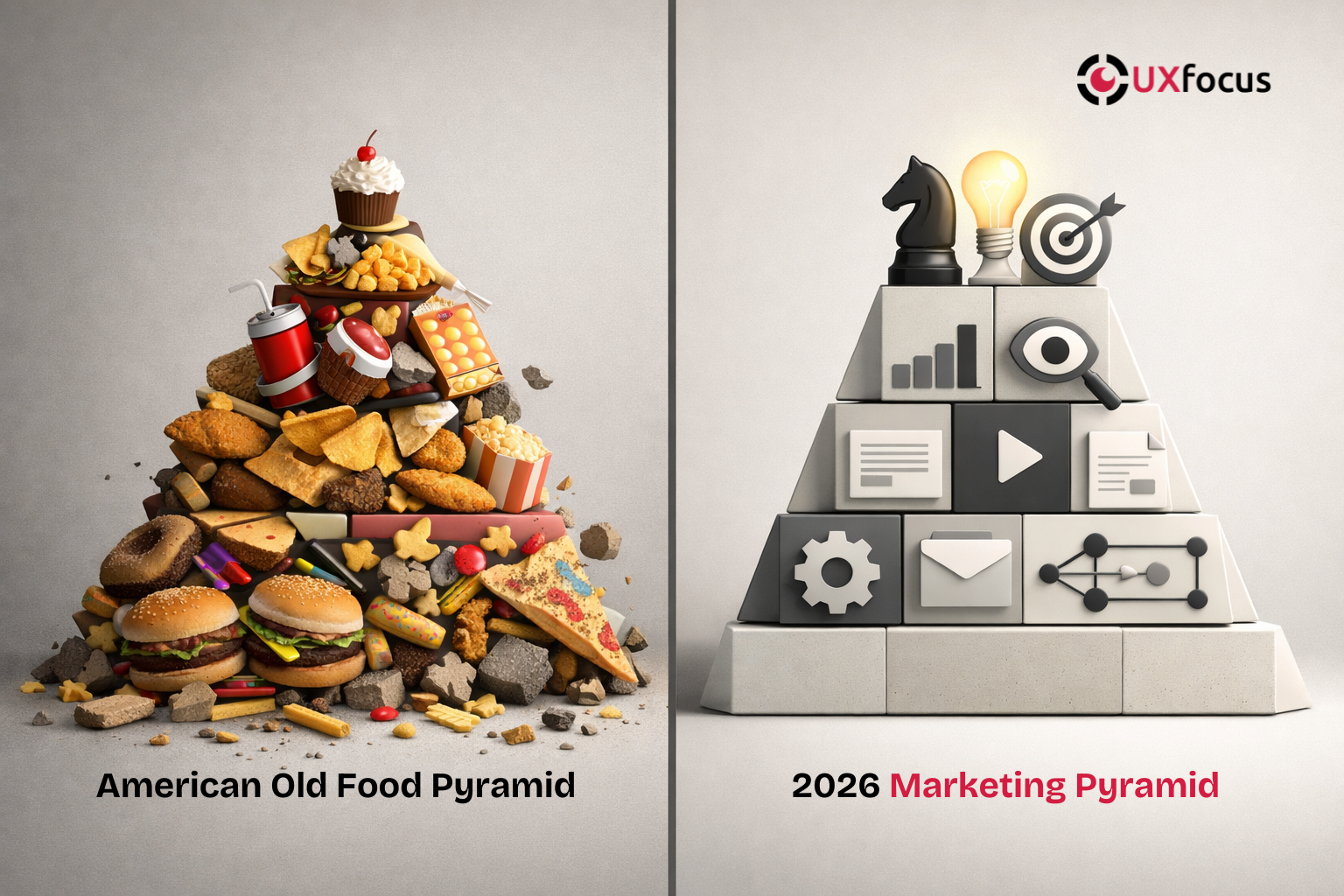
The Marketing Pyramid Explained: 5 Smart Tiers That Drive Scalable Growth
The marketing pyramid is a strategic framework that shows how effective marketing must be built from the ground up starting with fundamentals like brand clarity and conversion infrastructure, and scaling toward authority, automation, and compounding growth.
The marketing pyramid is a strategic framework that shows why tactics like ads and content fail without strong foundations, just like the outdated food pyramid failed modern nutrition standards.
In summary: Businesses that focus only on ads or tactics fail because they skip the lower tiers of the marketing pyramid. Sustainable growth comes from stacking foundational marketing, demand capture, demand creation, nurture systems, and authority.
Table of Contents
- What Is the Marketing Pyramid?
- Tier 1: Marketing Foundations
- Tier 2: Demand Capture
- Tier 3: Demand Creation
- Tier 4: Nurture & Monetization
- Tier 5: Authority & Scale
- Why the Marketing Pyramid Matters
What Is the Marketing Pyramid?
The marketing pyramid is a hierarchy that organizes marketing activities by priority and impact. Lower tiers support higher tiers, meaning advanced strategies only work when the fundamentals beneath them are strong.
This model mirrors modern buyer behavior in 2026, where trust, clarity, and systems outperform isolated tactics like paid ads or social media posting.

Tier 1: Marketing Foundations (Non-Negotiable)
The foundation tier is where most businesses underinvest, yet it determines whether any marketing will convert.
- Brand clarity: Clear positioning, ideal customer profile, and differentiation.
- Offer & value proposition: A clear outcome, pricing logic, and risk reduction.
- Conversion infrastructure: Fast website, mobile UX, trust signals, strong CTAs.
- Tracking & data: GA4, CRM integration, attribution accuracy.
If Tier 1 is weak, traffic leaks, ad costs rise, and leads do not convert.
Tier 2: Demand Capture
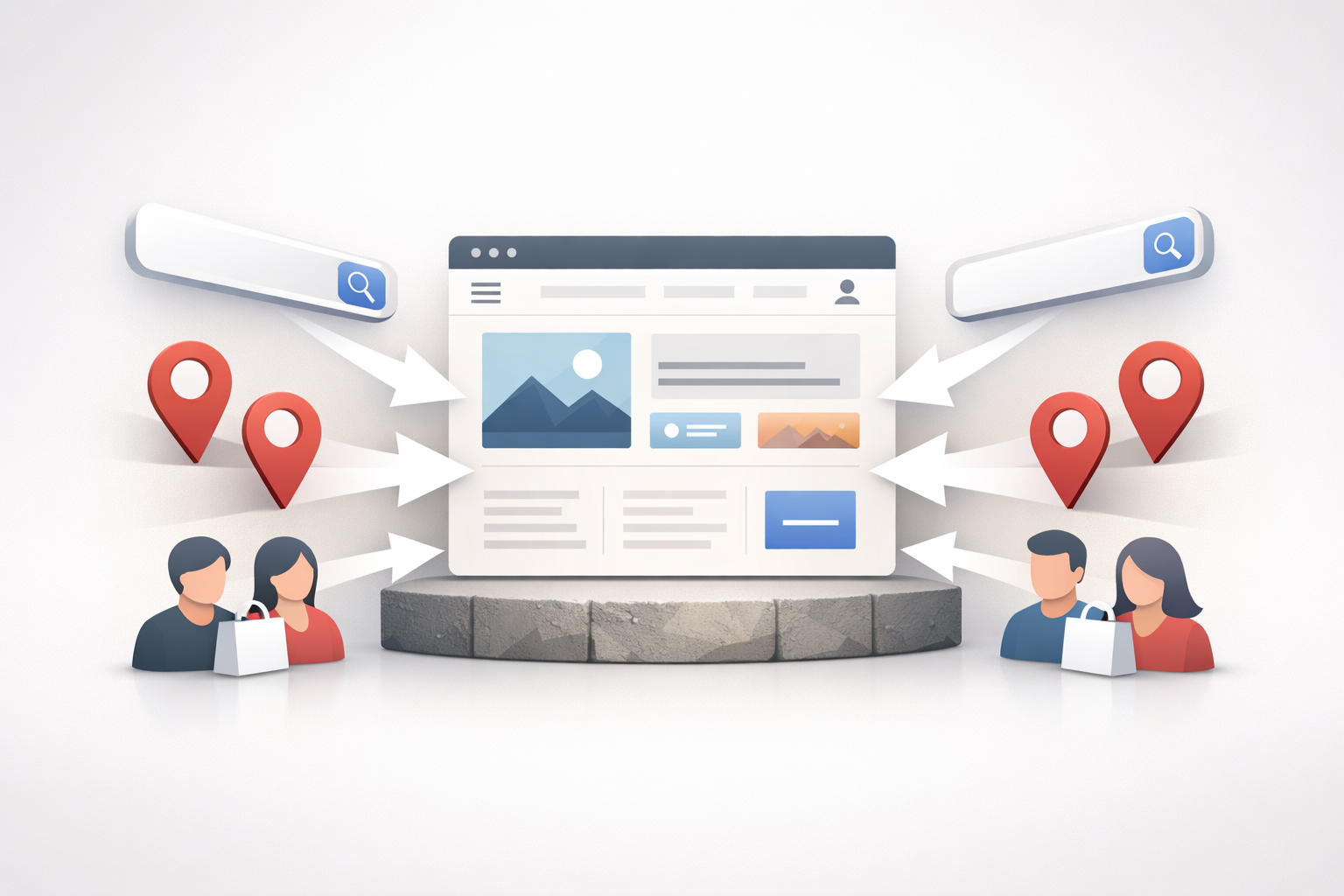
Demand capture focuses on converting buyers who already have intent.
- SEO & Local SEO: High-intent keywords and Google Business optimization.
- Marketplaces & directories: Industry platforms where buyers already search.
- Retargeting: Ads to warm website visitors and content viewers.
This tier typically delivers the highest ROI because it monetizes existing demand instead of creating new awareness.

Tier 3: Demand Creation
Demand creation introduces your brand to new audiences and builds familiarity over time.
- Content marketing: Blogs, videos, guides, and educational assets.
- Paid media: Meta, Google, YouTube, TikTok campaigns.
- Social proof: Reviews, testimonials, case studies, user-generated content.
In 2026, creative quality and messaging matter more than audience targeting.

Tier 4: Nurture & Monetization
This is where marketing systems turn attention into revenue.
- Email & SMS marketing: Follow-ups, broadcasts, segmentation.
- Funnels & automation: Lead magnets, booking flows, CRM automation.
- Sales enablement: Speed-to-lead, pipelines, scripts.
Without nurture, most traffic is wasted and customer acquisition costs rise.
Tier 5: Authority & Scale
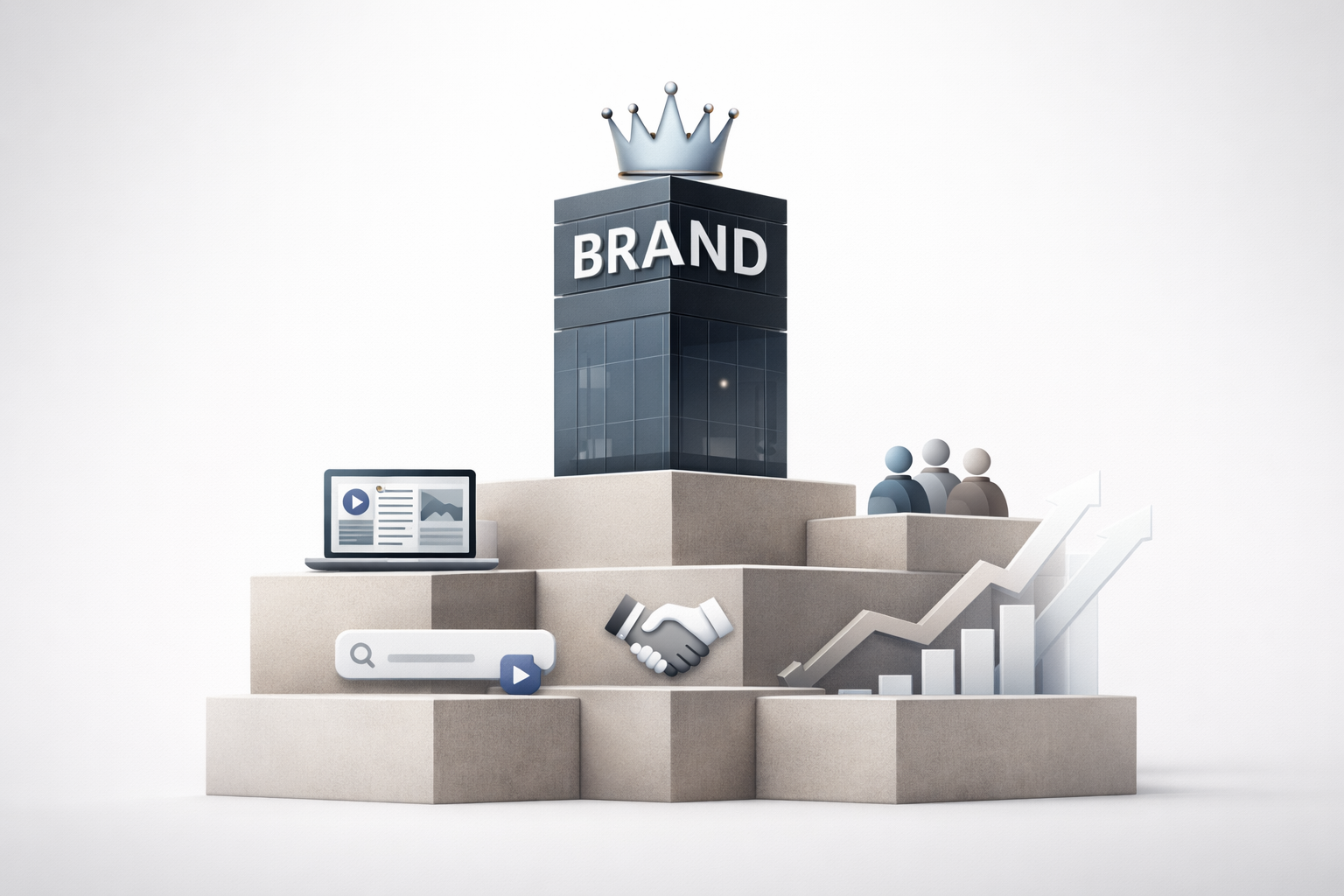
The top of the marketing pyramid is where growth compounds and competitors struggle to copy.
- Authority building: Thought leadership, media, partnerships.
- Owned audiences: Email lists, communities, events.
- Flywheels: Referrals, affiliates, brand advocacy.
- Optimization: LTV growth, offer stacking, channel reallocation.
Why the Marketing Pyramid Matters in 2026
Modern buyers are skeptical, comparison-driven, and time-constrained. The marketing pyramid ensures businesses build trust, capture intent, and scale sustainably instead of chasing tactics.
Strong brands do not graduate tiers—they stack them.
Next step: If you want help auditing or building your marketing pyramid, speak with a strategy advisor to identify gaps and opportunities.
FAQs About the Marketing Pyramid
- What is the marketing pyramid?
The marketing pyramid is a framework that organizes marketing activities by priority, showing how foundational elements support scalable growth. - Why do ads fail without a strong foundation?
Ads amplify weaknesses. Without clear positioning, offers, and conversion systems, traffic will not convert efficiently. - Which tier delivers the highest ROI?
Demand capture often delivers the fastest ROI because it targets buyers with existing intent. - Can small businesses use the marketing pyramid?
Yes. Small businesses benefit most by strengthening the foundation and demand capture tiers first. - Do you need all tiers at once?
No, but long-term success requires stacking each tier over time.