How to Prioritize Marketing Efforts: What to Fix First, Second, and Last
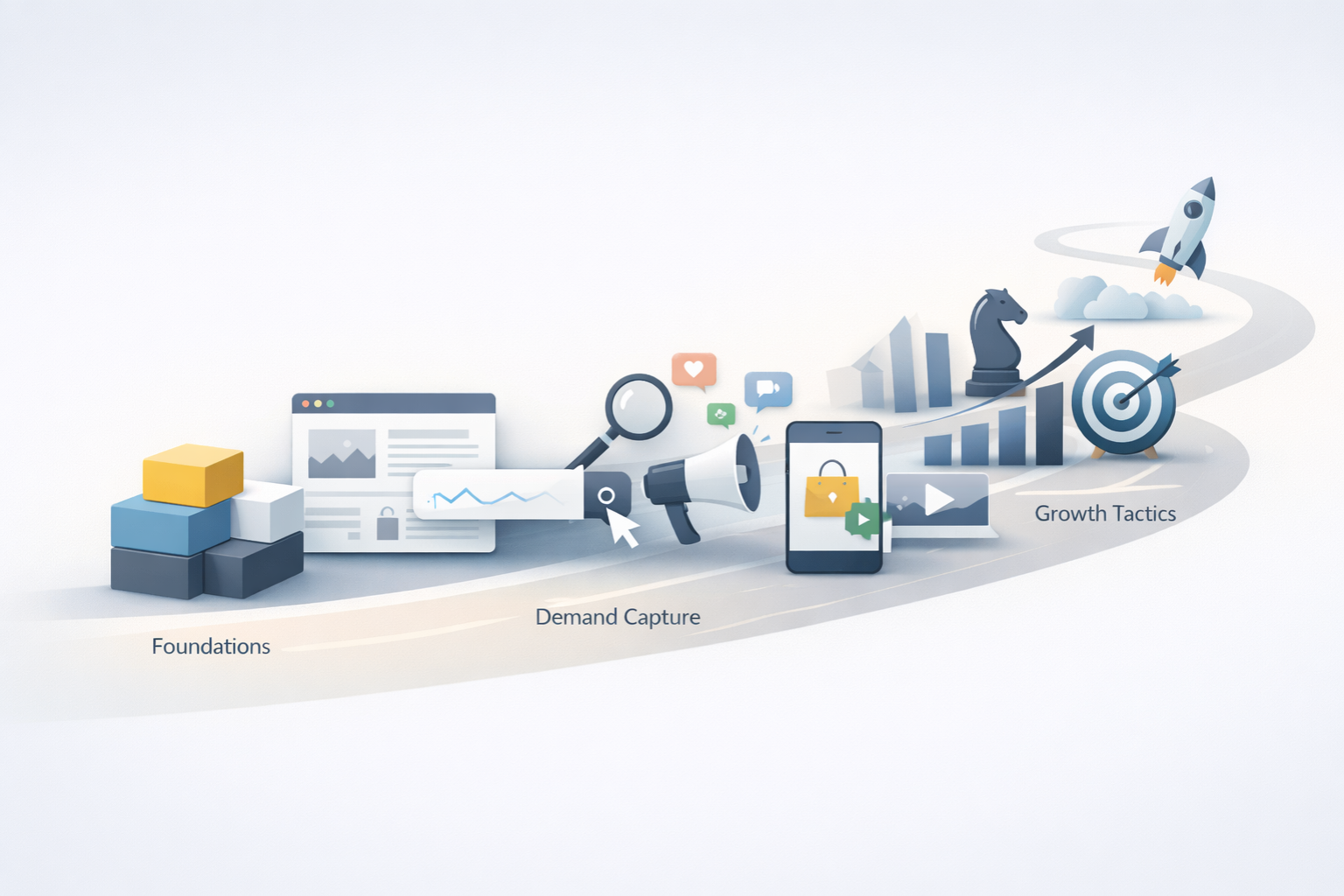
How to prioritize marketing efforts comes down to sequence, not channels. Businesses scale faster and waste less money when they fix marketing in the right order starting with foundations, then capturing demand, before expanding into growth tactics.
In summary: Marketing works best when efforts are layered deliberately. Fixing the wrong thing at the wrong time leads to wasted spend, inconsistent results, and stalled growth.
Table of Contents
- Why marketing prioritization matters
- The most common prioritization mistake
- What to fix first
- What to fix second
- What to fix last
- Prioritization by business stage
- Using the marketing pyramid to remove guesswork
Why Marketing Prioritization Matters
Most marketing problems are not caused by effort rather they’re caused by fixing the wrong thing first. When tactics are stacked on unstable foundations, results become unpredictable and expensive.
Prioritization creates leverage. It ensures every improvement increases the effectiveness of what comes next.
The Most Common Marketing Prioritization Mistake
The most common mistake is starting with visibility instead of conversion.
Businesses often jump straight to paid ads, social posting, or content production without first ensuring clarity, relevance, and follow-up. This leads to traffic without traction.
What to Fix First: Marketing Foundations
Foundations determine whether marketing converts at all. These should always be addressed first.
- Positioning: Who you help, what problem you solve, and why you’re different.
- Offer clarity: Clear outcome, relevance, and reduced risk.
- Website UX: Fast load times, mobile usability, simple CTAs.
- Tracking: GA4, conversion events, and CRM visibility.
Without these, every marketing dollar becomes less efficient.
What to Fix Second: Demand Capture
Once foundations are stable, the next priority is capturing existing demand.
- SEO and local SEO
- High-intent search ads
- Directories and marketplaces
- Retargeting warm traffic
Demand capture often delivers the fastest ROI because it converts people already looking for solutions.
What to Fix Last: Growth and Scale Tactics
Growth tactics work best when layered on top of strong foundations and reliable demand capture.
- Content marketing
- Cold paid media
- Social media expansion
- Brand awareness campaigns
These tactics amplify what already works. If the base is weak, they magnify inefficiency instead.

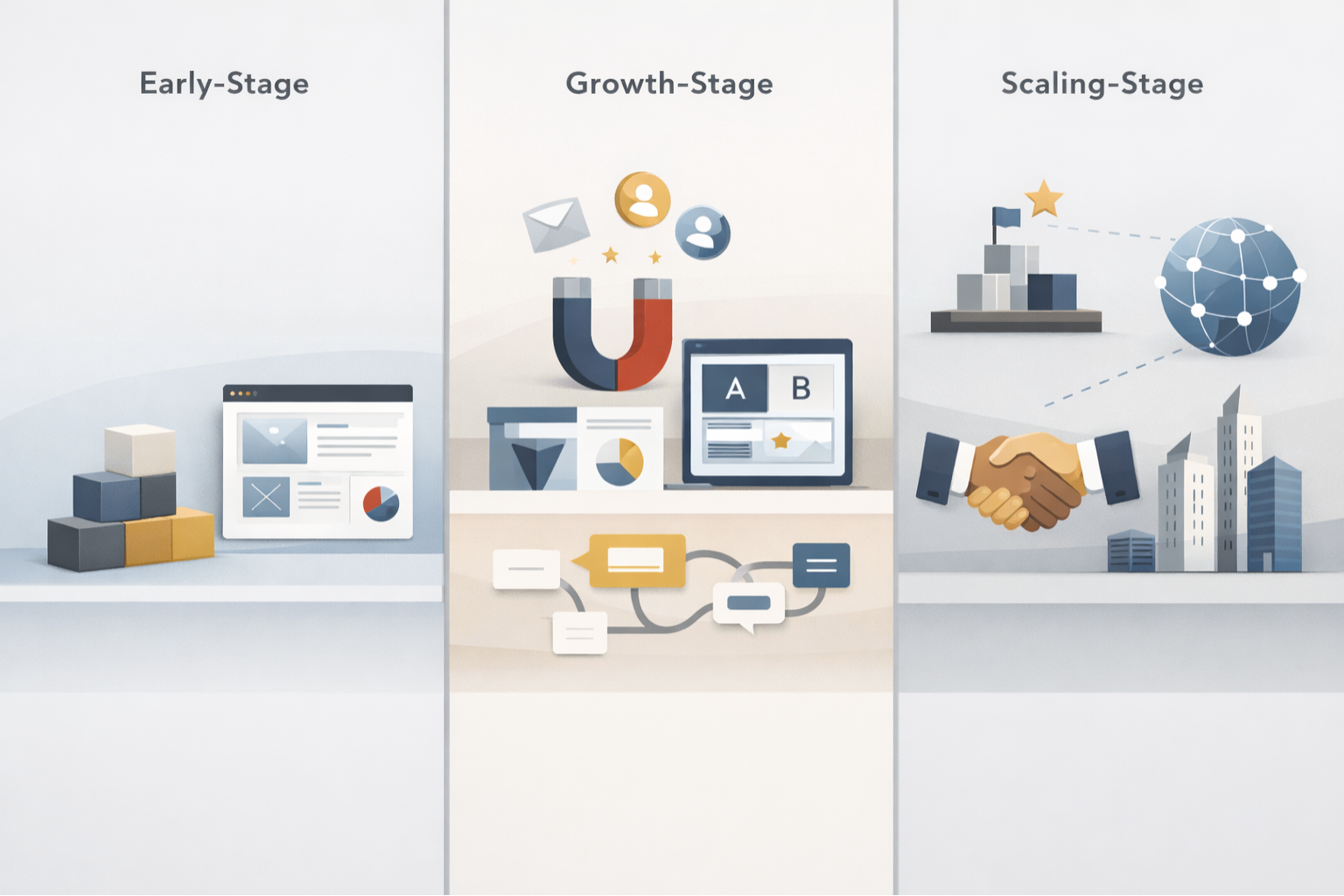
How to Prioritize Marketing by Business Stage
Early-Stage Businesses
- Positioning and offer clarity
- Conversion-ready website
- Basic demand capture
Growing Businesses
- Nurture systems (email, SMS)
- Conversion rate optimization
- Expanded demand capture
Scaling Businesses
- Authority and brand assets
- Partnerships and referrals
- Advanced automation
Using the Marketing Pyramid to Remove Guesswork
The marketing pyramid provides a clear prioritization framework: foundations first, intent second, growth third, and authority last.
For the full framework and all five tiers, read the cornerstone guide:
The Marketing Pyramid Explained: 5 Smart Tiers That Drive Scalable Growth
Conclusion
Marketing success isn’t about doing more. It’s about doing the right things in the right order.
Next step: If you want UXFocus to help prioritize your marketing roadmap and identify the highest-leverage fixes, start with a strategy review.
FAQs About Marketing Prioritization
- How do you prioritize marketing efforts?
By fixing foundations first, then activating demand capture, before expanding into growth and authority tactics. - Why shouldn’t you start with ads?
Because ads amplify existing weaknesses and increase costs when foundations are unclear. - What marketing tactic should businesses fix first?
Positioning, offer clarity, and conversion readiness. - Does prioritization change as a business grows?
Yes. Early businesses focus on clarity and capture, while scaling businesses invest more in authority and compounding channels. - What framework helps prioritize marketing?
The marketing pyramid provides a clear, structured prioritization model.